Forty-Five Videos, One Script
One lesson. Three languages. Seventy-four minutes of machine time, and nobody in the room for any of it. The number that actually changed how we work is a different one: making them a second time costs almost nothing.
Seventy-one seconds, narrated. It was itself built with the method it describes. The written version follows below.
There was a price nobody wrote down
You open an editor. You drag the clips onto a track. You line up the words with the pictures by hand. You wait for it to export. Then somebody asks for one change, and you do the whole thing again.
Most video ideas die right there. Not because they were bad, but because the edit was too expensive to open twice.
Two things that used to be stuck together
A video used to be one finished lump. Now it is made of two separate pieces, and the machine puts them together on demand.
The look
The colours, the fonts, where things sit on the screen. Written down once. Used by every video.
The content
The script, the pictures, the timing. Saved as plain information in a file, not baked into a video.
Change one and the other does not care. That is the whole trick.
Same drawing. Same layout. Different language.
These are two real frames from the same lesson. Look at the drawing, the gold bar, the box on the left, the line along the bottom. Nothing moved.
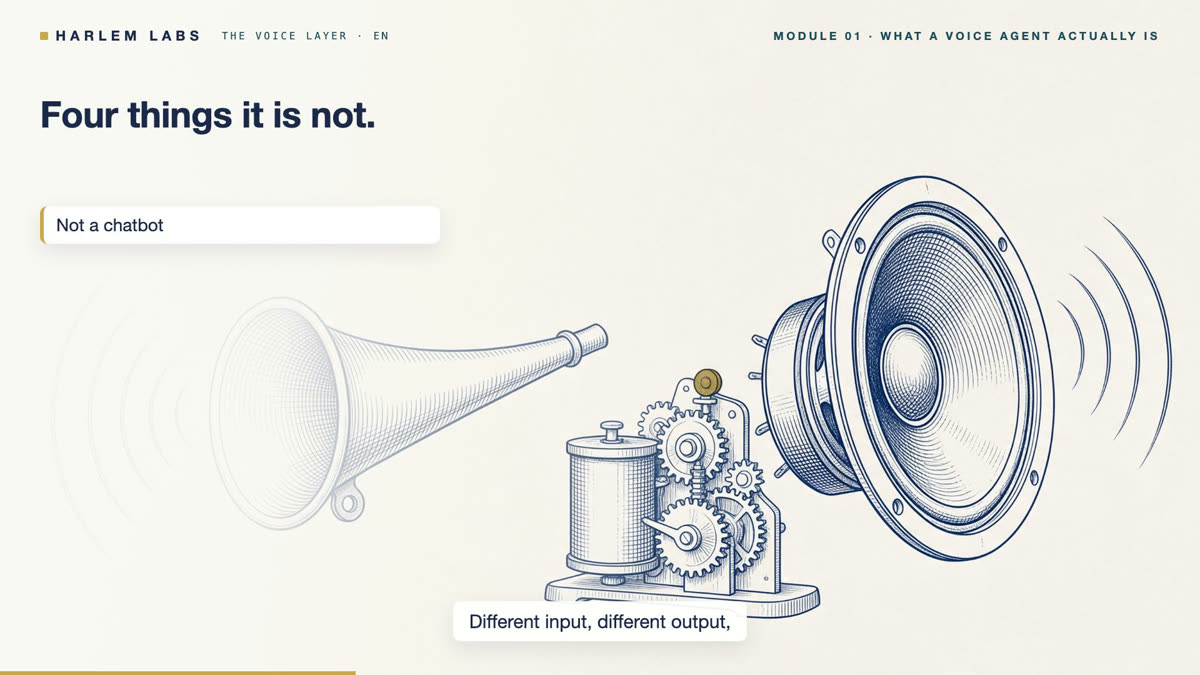
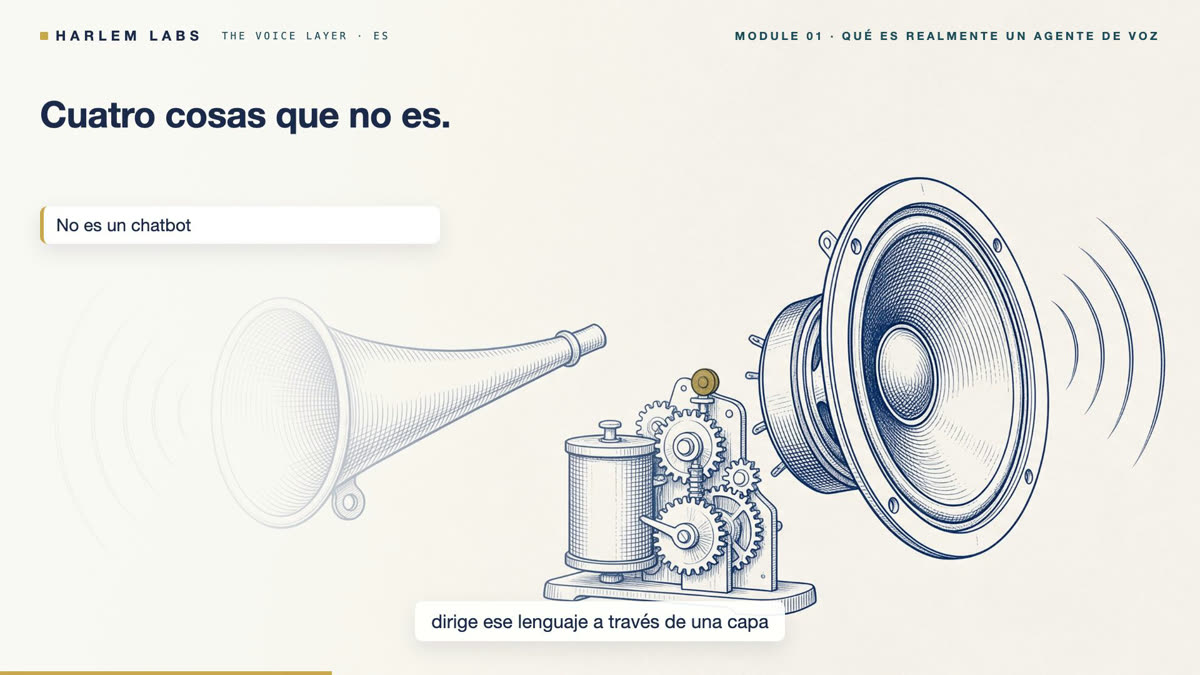
Nobody redrew the picture. Nobody moved a single word by hand. The writing on screen knows what second it is spoken, because the transcript carries the timing. Give it a new voice track and every word finds its own new place.
The same work, priced two ways
| The job | Bought at market rate | What it took here |
|---|---|---|
| Eighteen minutes of finished video, in two languages I do not speak | $900 to $3,600, and two to six weeks of calendar | 49 minutes, unattended |
| Eleven illustrations | A stock photo licence, renewed every year | Made once, reused in all three languages |
| One script, cut for every place people watch | Priced as a separate edit each time | Fifteen pieces per language, one command |
| Change the brand colour everywhere | Re-open and re-export every file | One line |
Market rate for professional voiceover localisation is $50 to $200 per minute of finished video, per language — Translated, “Video Translation Costs Explained: Subtitles, Voiceover, and AI Dubbing Compared.” Our own narration is AI and is not free either; it sits inside subscriptions already being paid for. The honest claim is not that the languages were free. It is that the third one cost almost nothing on top of the second.
It was never really about video
The same move shows up wherever something finished has to stay changeable. AI Think Trust and Nano Games are not videos — they are websites. But they are built the same way: described once, put together by machine, and cheap to change next month. One is a research practice. One is an arcade run by a twelve-year-old. Neither was assembled by hand.
The tool underneath the video work is Remotion, which builds video out of code instead of a timeline. It is free for individuals and companies of up to three people, and needs a paid company licence at four or more.